September 30, 2026
SPC vs PVC Panels: The Full Comparison
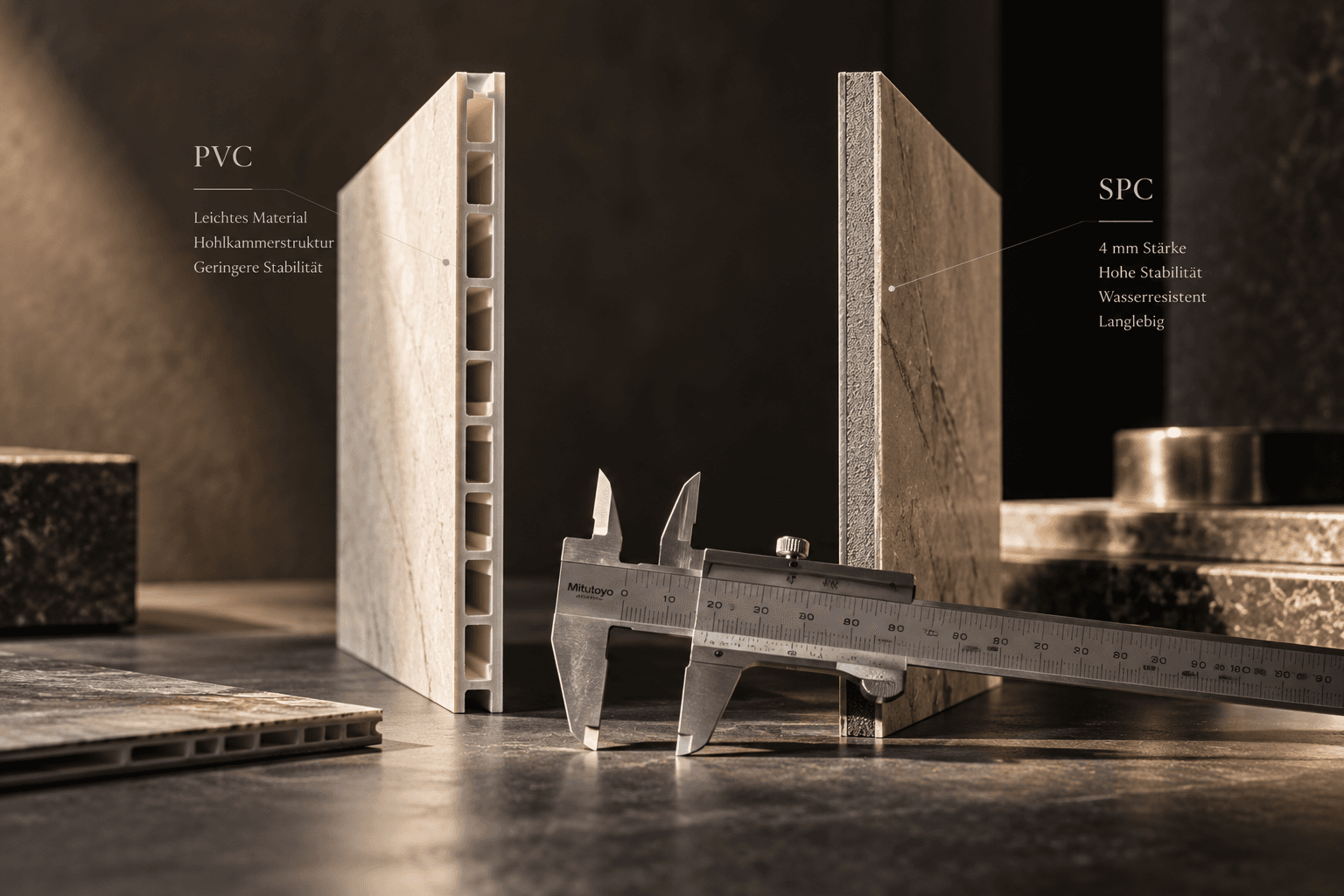
SPC and PVC often look identical from the front. Same decor, same gloss, sometimes the same price. But hold a cross-section of each side by side and you immediately understand why the material beneath the surface changes everything. This comparison shows where the differences lie and which material is the right choice for your project.
What is PVC?
PVC wall panels are made from polyvinyl chloride, a thermoplastic polymer. Inside, they have a hollow chamber structure: several parallel air channels that make the panel light and cheap to manufacture. This is not a design flaw — it is a deliberate choice for applications where weight and price matter more than rigidity.
The drawbacks show up in everyday use: PVC panels can warp under sustained heat (direct sunlight, proximity to radiators). They flex when pressed — the so-called spring feel. And the hollow chambers transmit sound: knocking on the wall sounds hollow.
What is SPC?
SPC stands for Stone Polymer Composite — a blend of natural stone powder (chalk, limestone) and polymer resins. The result is a solid, dense core with no cavities. 4 mm of thickness you can feel when you pick it up, when you knock on it, when you install it.
This mineral core has three decisive consequences:
- Dimensional stability: SPC barely expands with temperature changes — important in rooms with direct sunlight or underfloor heating.
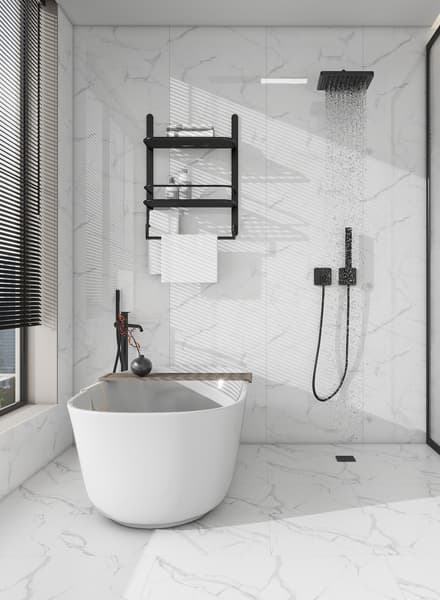
- 100 % waterproofness: The core is not porous. Water finds no path into the material — which is why SPC works even in showers and wet rooms.
- Acoustic solidity: No hollow knock. The wall sounds solid — because it is.
The direct comparison
| Property | PVC | SPC |
|---|---|---|
| Core structure | Hollow chambers | Solid mineral composite |
| Typical thickness | 5–10 mm (mostly air) | 4 mm (solid) |
| Weight | Lighter | Heavier, more stable |
| Temperature stability | Can warp (>60 °C) | Very high |
| Waterproofness | Surface OK, edges at risk | 100 % — core included |
| Acoustic behaviour | Hollow | Solid, massy |
| Compressive strength | Flexes under pressure | No flex |
| Fire class (typical) | B2 or unclassified | B1 possible (like NordPaneele) |
| Price | Lower | Slightly higher |
| Expected lifespan | 5–8 years (est.) | 10+ years (guaranteed) |
When is PVC the right choice?
PVC has its place — in applications that rarely see moisture or temperature extremes and where budget is tight:
- Exhibition stands and temporary installations
- Suspended ceilings in dry office areas
- Short-term rental property upgrades
For residential interiors — especially bathrooms, kitchens and living rooms — SPC is the better investment. What looks cheaper at first glance can prove more expensive through shorter lifespan and the cost of earlier replacement.
Why NordPaneele sells SPC exclusively
We made a deliberate decision against PVC. The reason is not only technical — it is also about accountability. A panel in a shower that shows moisture damage after two years is a problem for our customers and a reputational risk for us. SPC allows us to offer a warranty of up to 10 years on printed surfaces — which is not possible with PVC.
There is also fire safety: our SPC panels meet fire class B1 under DIN EN 13501-1. Many PVC products remain at B2 or carry no classification at all.
Frequently asked questions
Can I use PVC panels in a bathroom?
Technically yes — but with limitations. The surface is water-repellent, but the hollow chambers and edges can absorb moisture over time if the silicone sealant deteriorates. In a direct shower zone, SPC is the significantly safer choice.
Are SPC panels harder to install than PVC?
Slightly heavier in the literal sense — the weight is higher. The installation process itself is comparable: both can be bonded or click-locked. The solid core actually makes SPC easier to cut cleanly, because it does not splinter the way hollow PVC chambers do.
Can SPC be recycled?
SPC is harder to recycle than pure PVC due to its mineral content. However, it lasts significantly longer — the environmental balance over the full service life is therefore comparable or better.
How do I identify an SPC panel when buying?
The simplest test: knock on the back. SPC sounds solid and dull. PVC sounds hollow. When possible, ask for a cross-section or check the product specification: the core material should read "Stone Polymer Composite" or "mineral composite", not just "PVC" or "vinyl".