

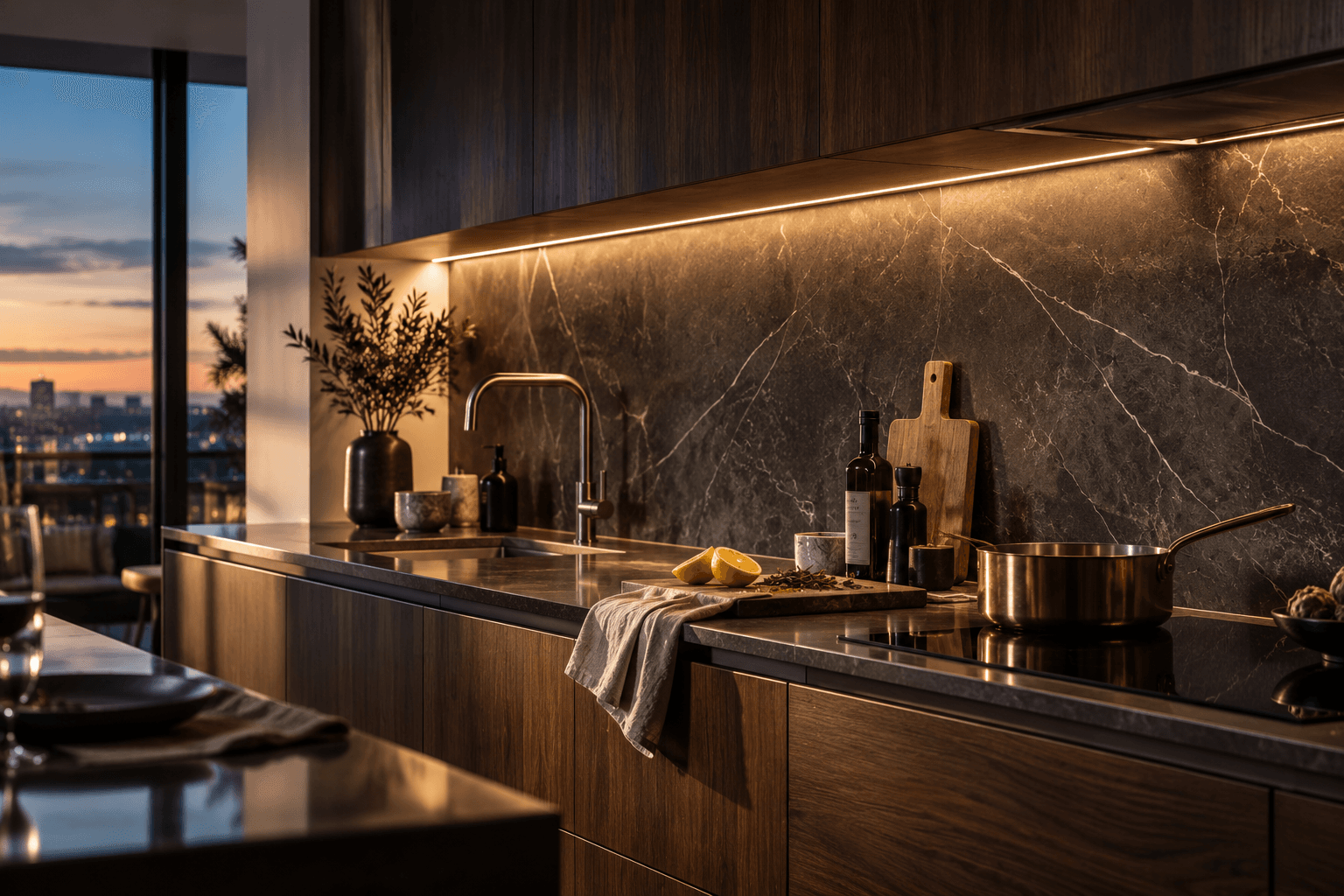
September 30, 2026
SPC Kitchen Backsplash: Pros and Cons
The kitchen backsplash is the most demanding wall surface in the home: steam, grease, splash water, heat — every single day. It is no surprise that "can SPC wall panels be used in a kitchen?" is one of our most frequently asked questions. The honest answer: yes — with clear strengths and one limitation you must know about.
What a kitchen backsplash must deliver
Before listing the pros and cons, a quick reality check: the wall behind the worktop is exposed every day to water vapour, grease splashes, cleaning agents and — depending on its position — direct heat. Classic materials such as tiles, natural stone or toughened glass are the standard for exactly this reason. What must all of them deliver?
- Water-repellent or waterproof
- Grease-resistant and easy to clean
- Heat-resistant in the relevant range
- Mechanically robust (no denting, no chipping)
The advantages of SPC wall panels in the kitchen
1. No grout — no grease traps
The biggest problem with tiled backsplashes is not the tile, it is the grout. Discoloured, greasy or mouldy grout lines are the number-one irritant in kitchens. SPC panels installed with a click system or full-surface bonding are virtually grout-free — only the finishing edges (hob, worktop) need silicone. Fewer grout lines = less cleaning effort.
2. 100 % waterproof
The mineral core of SPC panels absorbs no water. Steam, splash water from washing up, condensed cooking moisture — all of it runs off the surface. The prerequisite: edges and joints are cleanly sealed with sanitary silicone.
3. Stone look without stone weight or stone price
A real marble backsplash costs between €200 and €600 per square metre — for the material alone. Large-format ceramic tiles run to €80–200. SPC wall panels in a comparable look cost €30–50 per square metre and can be installed without a tiler.
4. Installation over existing tiles is possible
Anyone renovating a kitchen backsplash without removing existing tiles can bond SPC directly over them — provided the old tiles are firmly adhered and the wall is flat. This saves chiselling and disposal costs.
5. Easy to replace
On moving out or changing the kitchen: click panels come off tool-free; bonded panels come away with a scraper and some patience. Real stone backsplashes or large ceramic panels are essentially inseparable from the wall.
The disadvantages — what you need to know
Limitation: heat directly at the hob
This is the most important point and it deserves clarity: SPC wall panels should not be installed directly behind a gas hob if the distance to the open flame is less than 30 cm. Most manufacturers specify a continuous temperature limit of 60–80 °C — which is generally not a problem with induction or ceramic hobs, as the rearward heat radiation is low. With gas, it can be locally hotter.
Practical solution: Use a heat-resistant material in the immediate hob zone (typically 30 cm left, right and behind the hob) — a stainless steel panel, glass or ceramic tiles — and use SPC panels for the rest of the backsplash. Most kitchens have an extractor hood that covers this area anyway.
Not a cutting surface
The SPC panel is a wall cladding, not a chopping board. Direct knife contact with the surface will leave scratches in the PU wear layer. In practice nobody cooks directly against the wall — but it is worth mentioning.
Not suitable for high radiant heat
Anyone with a traditional wood-burning stove or a gas hob with very high lateral heat radiation should use more heat-resistant alternatives in the immediately adjacent zone. SPC is not a ceramic material and will soften under sustained overheating.
Which decors work best for kitchen backsplashes?
For kitchens we recommend:
- Dark stone looks (anthracite, slate, dark marble) — show grease splashes less than light surfaces and look premium at the same time.
- Mid-tone concrete look — easy to maintain, timeless, works with almost any kitchen front colour.
- Travertino and light marble tones — for open kitchens with plenty of daylight; the easier cleaning from wiping more often is manageable.
High-gloss decors are less recommended in the kitchen: they show fingerprints and water spots immediately. If you still prefer gloss, wipe down briefly after cooking each day.
Installation tips specific to the kitchen
- Worktop first. Install the panels after the worktop is in place — this lets you seal the joint cleanly with silicone.
- Plan the hob clearance zone. Mark the hob safety zone (30 cm radius) before installation. This area either stays uncovered or gets a different material.
- Silicone all edges. Corners, window reveals, joints at base units — anywhere two surfaces meet, apply sanitary silicone. This prevents cooking moisture from tracking behind the panels.
- Cut socket cutouts with a jigsaw, not a knife. The mineral core splinters cleanly with a jigsaw; a cutter will cause ragged edges.
Frequently asked questions
Can I use SPC panels behind the hob?
With induction and ceramic glass: yes, if the lateral and rear clearance is at least 10–15 cm and the area is not exposed to sustained temperatures above 60 °C. With gas: not in the direct flame zone — use a more heat-resistant material there.
How do I clean SPC panels in the kitchen?
Daily: damp microfibre cloth, no pressure. Stubborn grease spots: pH-neutral all-purpose cleaner, leave briefly, wipe off. No abrasive cleaners, no oven spray, no steam cleaner above 60 °C.
Does the silicone last?
Sanitary silicone lasts 5 to 10 years under normal kitchen use. Check the joints annually: if you see cracks or lifting, reseal immediately before moisture gets behind the panels.
Can I mount an extractor hood through SPC panels?
Yes. Drill through the panel at the fixing point, anchor the hood with plugs into the wall behind, and seal the penetration with a matching trim ring or silicone.
More articles
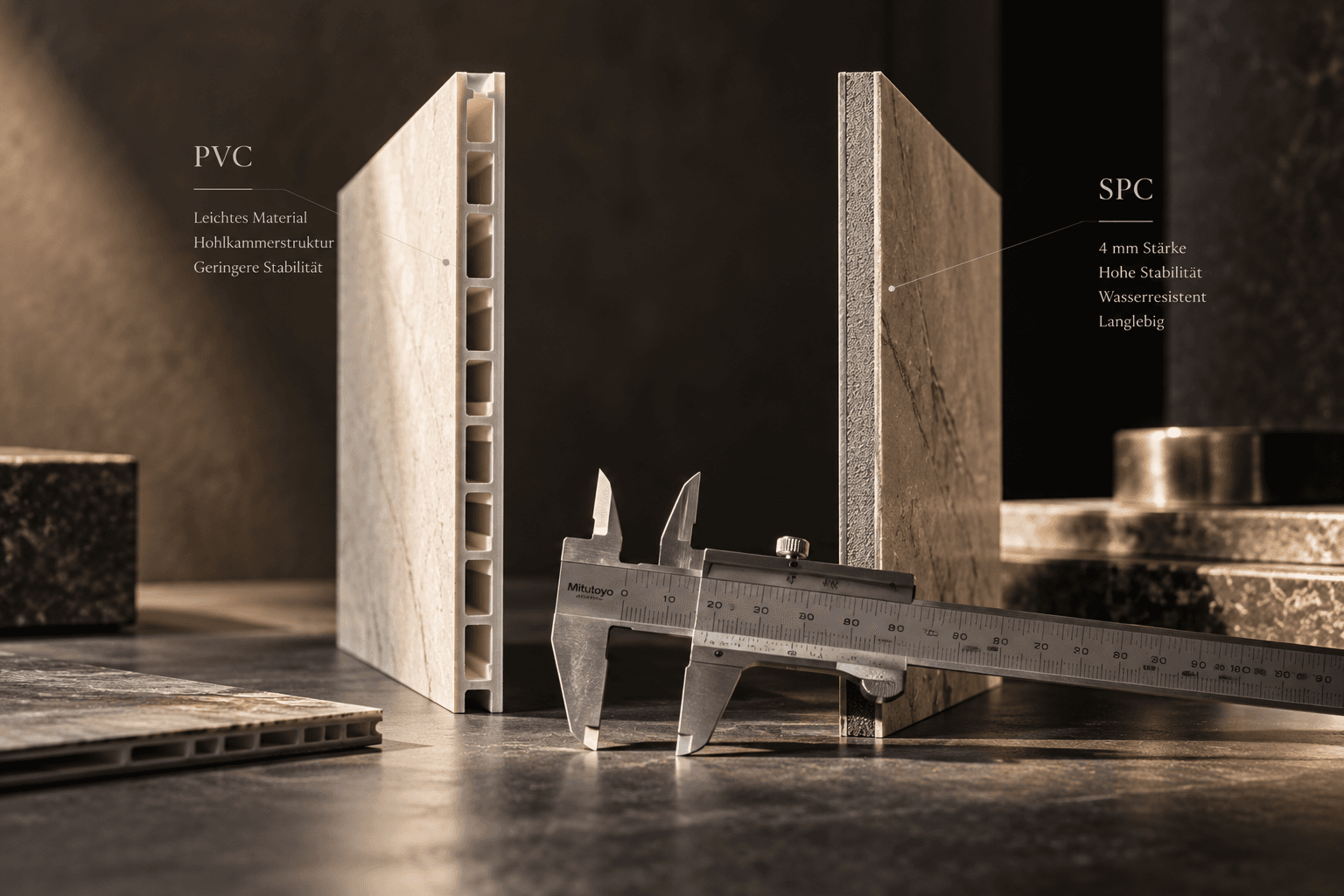
SPC vs PVC Panels: The Full Comparison
Same decor, different core: what really separates SPC and PVC wall panels — core structure, waterproofness, stability and lifespan compared head to head.
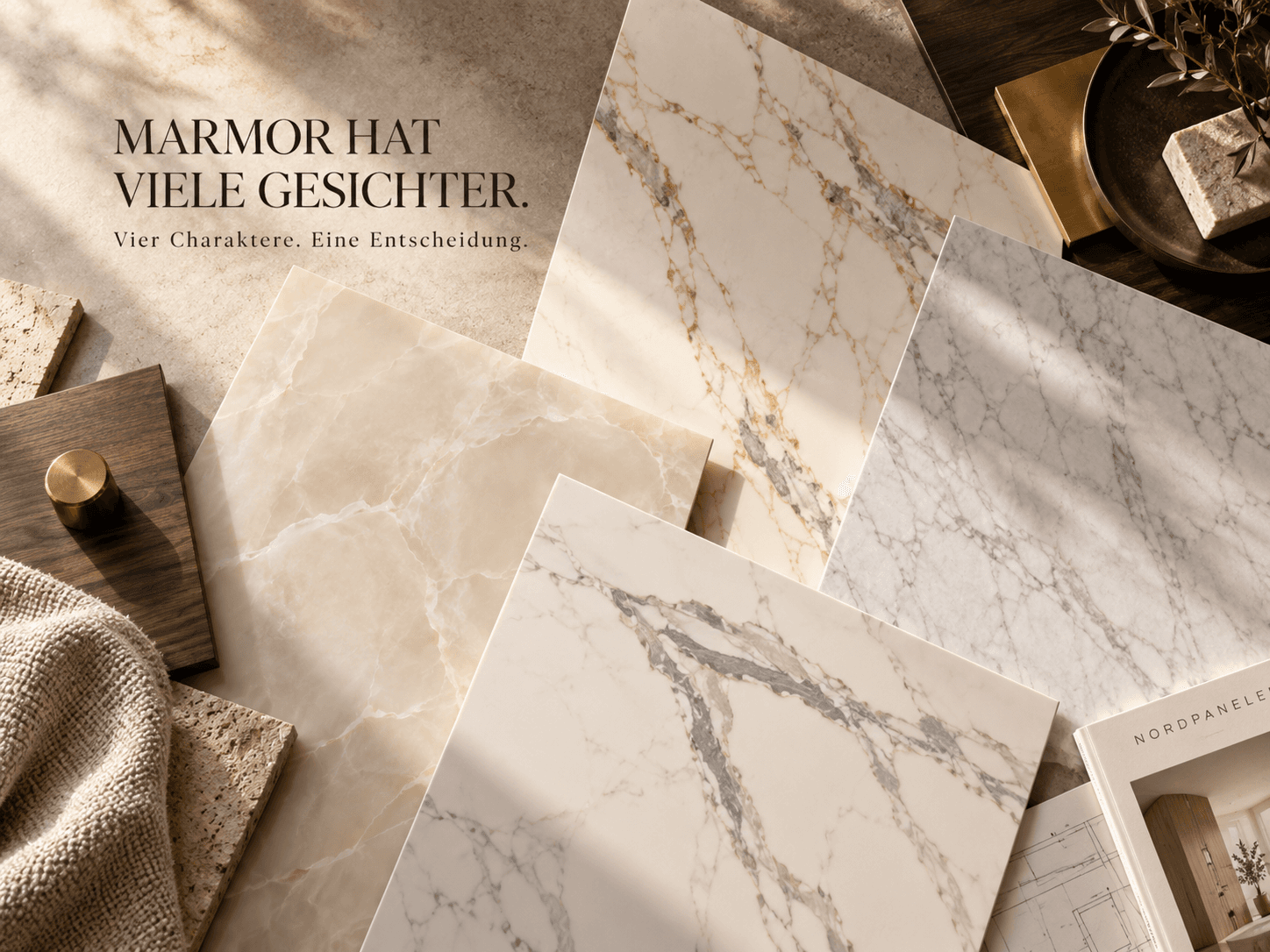
Marble Look: Which Decor Is Right for You?
Onyx Beige, Calacatta Gold, Statuario or Carrara — four marble characters, one decision. This guide helps you find the decor that suits your room and your style.

Modernise Your Bathroom Without Retiling
Worn-out bathroom tiles are not a verdict. SPC wall panels mount directly over existing tiles — no dust, no chiselling, often done in a single weekend.