Wird geladen...
Free shipping from €299
Free shipping from €299
Material comparison
How SPC wall panels measure up against classic shower-wall materials.
| Material | Seams | Waterproof | Weight /m² | Installation | Care | Price /m² |
|---|---|---|---|---|---|---|
| SPC wall panel | Seamless | 100% | approx. 7.5 kg | Almost tool-free, straight onto tile | A wipe is enough | from €29.99 |
| Ceramic tile | Many silicone seams | Seams prone to failure | approx. 15–20 kg | Specialist trade, rubble | Scrubbing the grout | from €25 + fitting |
| Natural-stone slab | Few seams | Sealing required | approx. 40–60 kg | Heavy, specialist trade | Reseal regularly | from €80 |
| Glass back wall | Edge seams | 100% | approx. 20–25 kg | Made to measure, fitter | Limescale shows | from €120 |
| Acrylic / solid surface | Bonded joints | 100% | approx. 8–10 kg | Cutting, bonding | Scratch-sensitive | from €90 |
| PVC panel | Click profile | Waterproof | approx. 4 kg | Almost tool-free | A wipe is enough | from €12 |
Guide values; prices vary by decor, area and region. NordPaneele in-house market survey, 2026.
100% waterproof
Mineral SPC core — it won't swell, even under constant spray.
Seamless
Drop-Click joints instead of silicone seams — no grout mould.
Large format
Panels up to 2.80 m high — back walls that look cast in one piece.
Quickly fitted
Almost tool-free, straight onto existing tiles — in a single day.
Shower geometry
Whether open, around a corner or in a niche — the panels follow the geometry of your shower.
A single open back wall as one continuous surface — ideal for the seamless large-format look.
Two abutting walls with a clean internal-edge finish instead of a silicone bead.
Three walls in one material language, including shelf niches without a grout cross.
Even curved junctions can be solved in the same material with narrow panel strips.
Before · After
Calacatta Oro
„From old tile to a seamless marble wall in two days — without rubble.“
Travertino Naturale
„The warm stone look feels more premium than the tiles that were there before.“
Grigio Alpi
„Removable yet still waterproof — perfect for a rented flat.“
Worked example
Sample calculation for a typical shower-back wall of around 6 m² — material including profiles and sealing. Excludes rubble disposal and a tiler.
Walk-in flat price →NordPaneele in-house market survey, 2026
Direct fitting
Firm, level tiles are the ideal substrate. The 4 mm-thin panels are bonded or clicked over the top — no tearing out, no skip for rubble, no weeks of remodelling. The shower wall is usable again the same day.
Check the substrate
Tiles must be firm, level and load-bearing. Repair any loose spots first.
Fit the panels
Cut the panels to size, bond or click them — butted seamlessly edge to edge.
Seal
Finish the edges cleanly with sanitary sealant and sealing tape.
Sample box
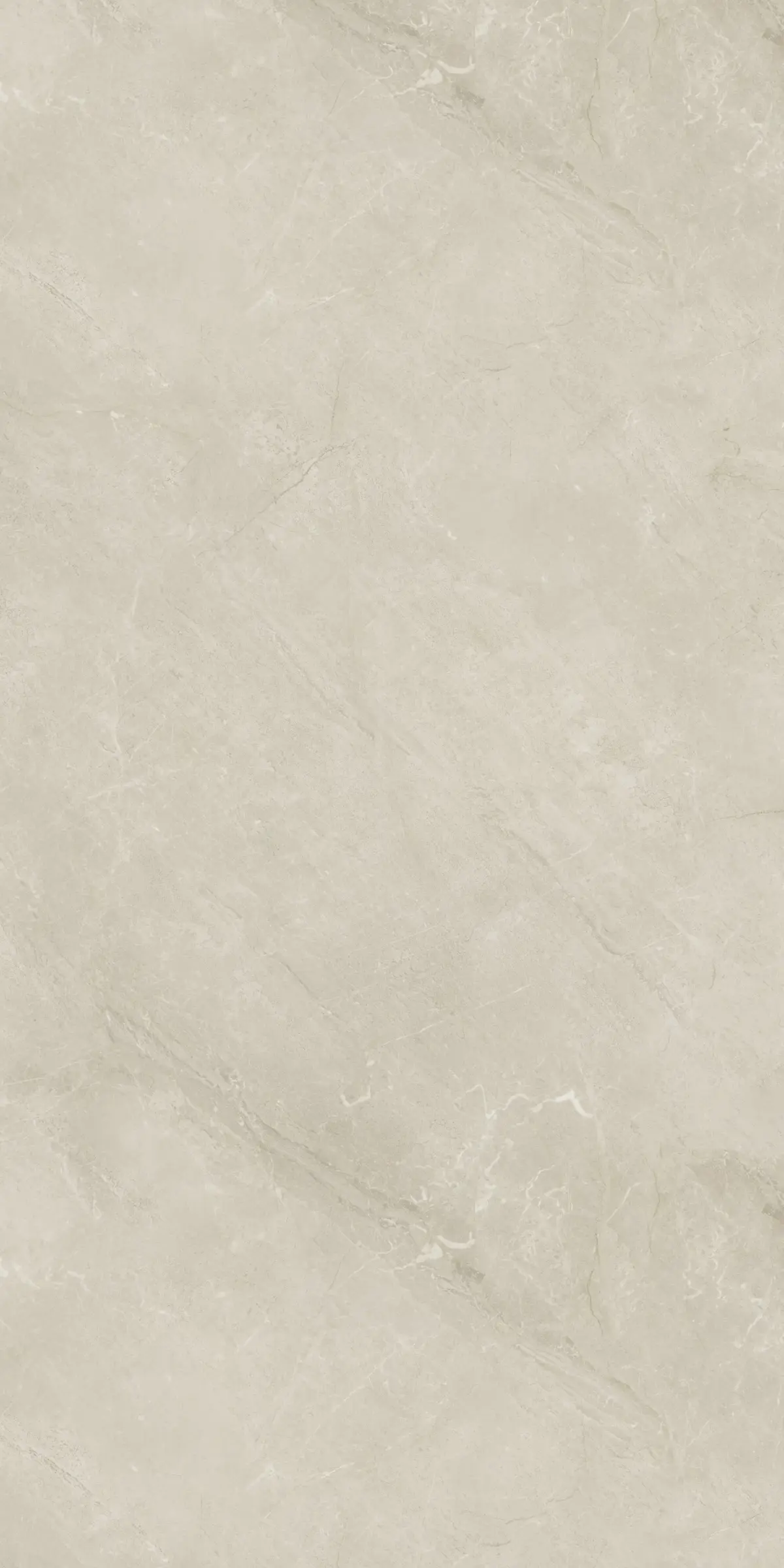
Order up to three free samples and check colour, surface and texture in your own bathroom — usually delivered within two working days.
FAQ
Yes. The mineral SPC core absorbs no water and does not swell. Combined with the seamless Drop-Click system and a continuous run of sealing tape, it forms a continuously waterproof surface — even in the direct spray zone of the shower.
In most cases, yes. If the tiles are firm, level and load-bearing, the 4 mm-thin panels are bonded directly over the top or clicked onto a substructure. That saves tearing out the old tiles along with the rubble and dust.
The joints are connected seamlessly via the Drop-Click profile. At the floor, ceiling and side junctions they are finished with sanitary sealant and sealing tape. That leaves no gap for water to get in.
The closed PU wear layer is almost pore-free, so limescale and dirt barely take hold. Because there are no silicone seams across the surface, the usual grout mould has nothing to cling to. A damp cloth is enough to clean it.
Yes. The SPC core stays dimensionally stable up to around 60 °C and barely reacts to temperature changes. Unlike soft PVC, it does not warp or buckle with warm shower water and steam.
The large-format panels come in heights up to 2.80 m, so a shower-back wall usually looks seamless and all of a piece. Widths are cut to measure — including around fittings, shelves and corners.
No. The Drop-Click system is almost tool-free to lay: measure, cut to size, click in, seal. For straight shower walls it's a one-day project for confident DIYers — for complex geometries we recommend our fitting guide or a specialist firm.
With clear water and a soft cloth or squeegee, and a mild, non-abrasive cleaner if needed. Scouring cream, steel wool and aggressive solvents aren't necessary and should be avoided to protect the wear layer.
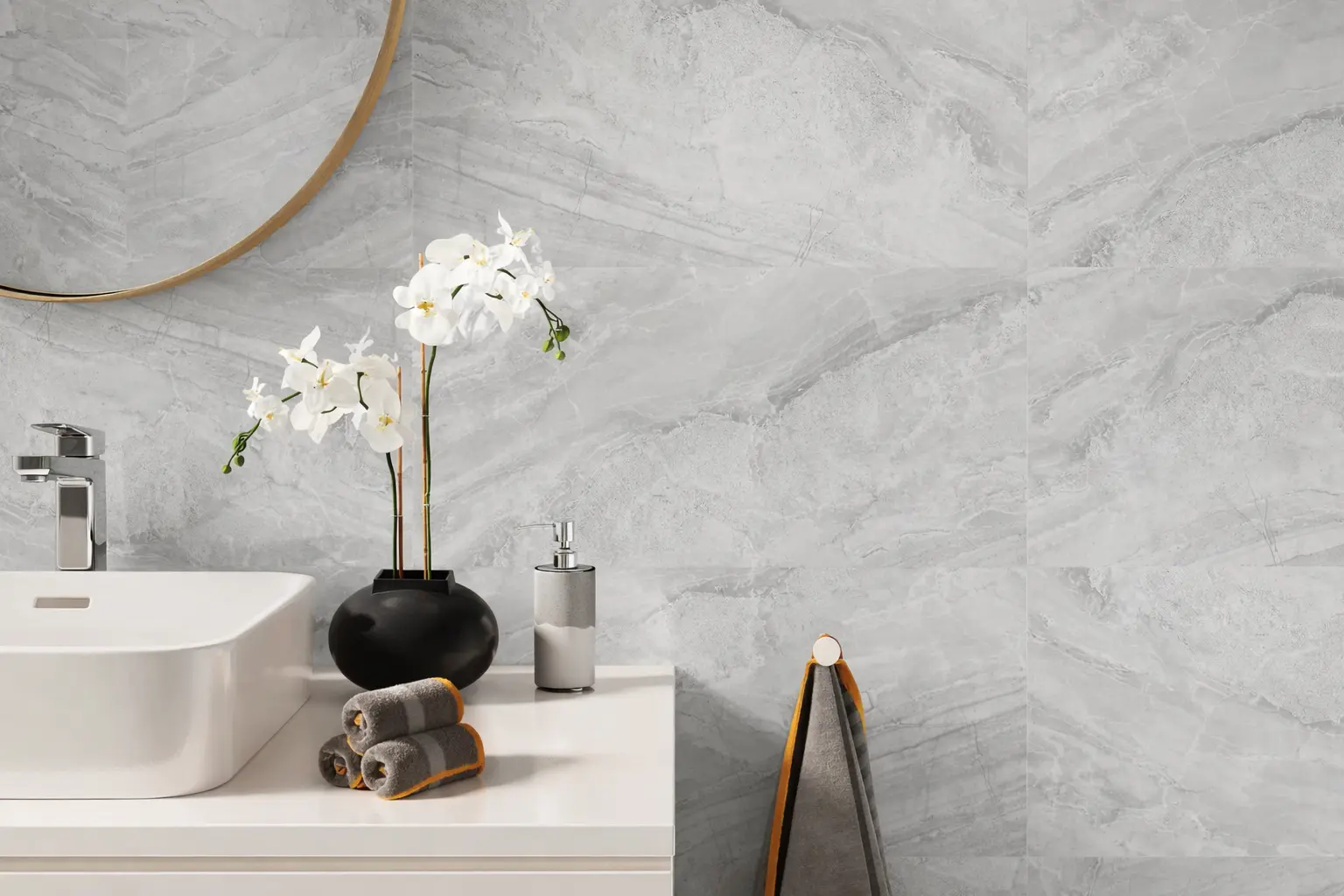
Glass and acrylic mostly offer plain or printed surfaces and rarely convince in a stone or marble look. SPC panels carry a photorealistic, embossed-in-register stone look with genuine texture — at a lower weight and with easier fitting than large-format natural-stone or glass solutions.
Yes. We send up to three free samples within Germany, usually within two working days. That lets you judge colour, surface and texture in your own bathroom in real light before you decide.
Discover more
Shower wall
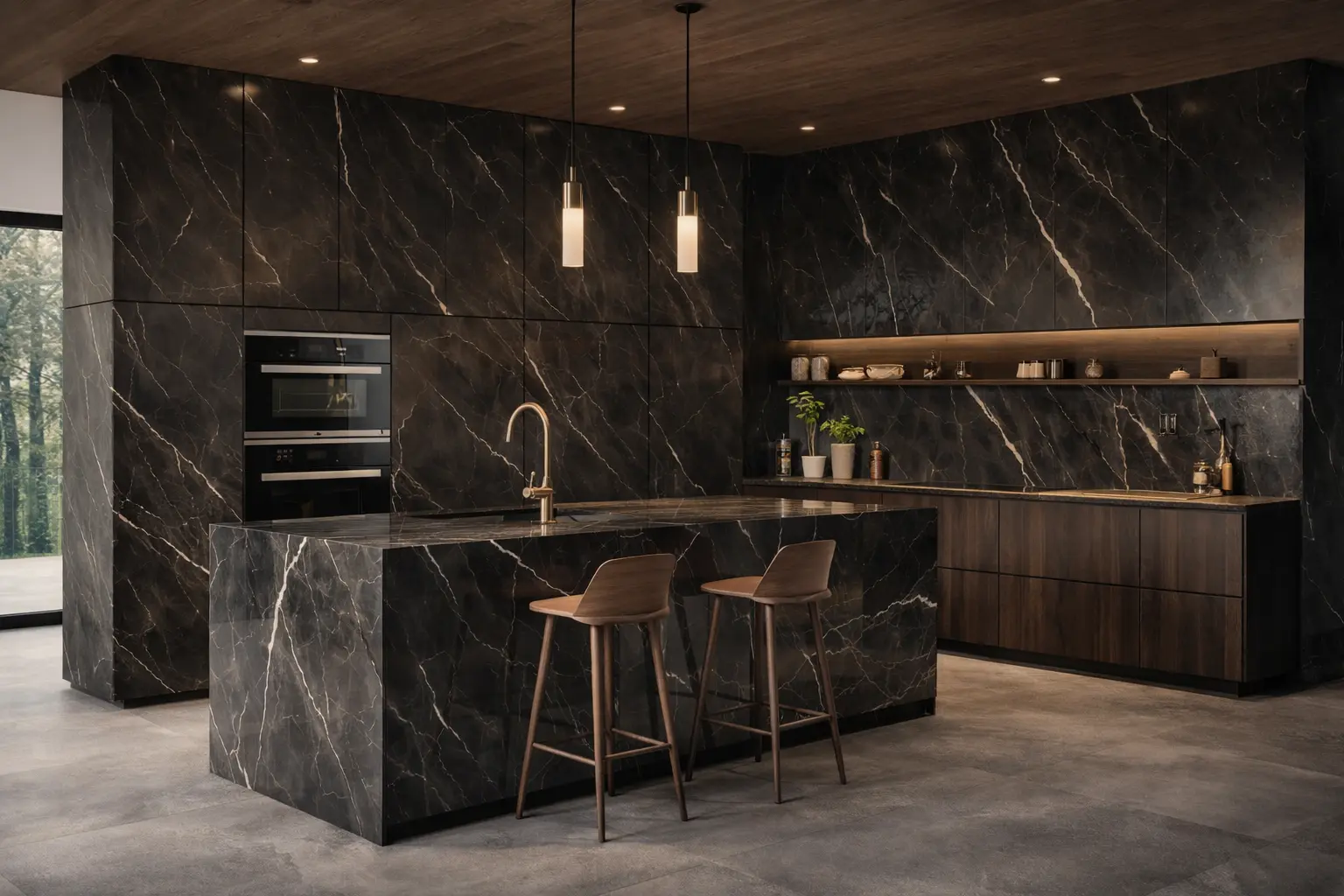
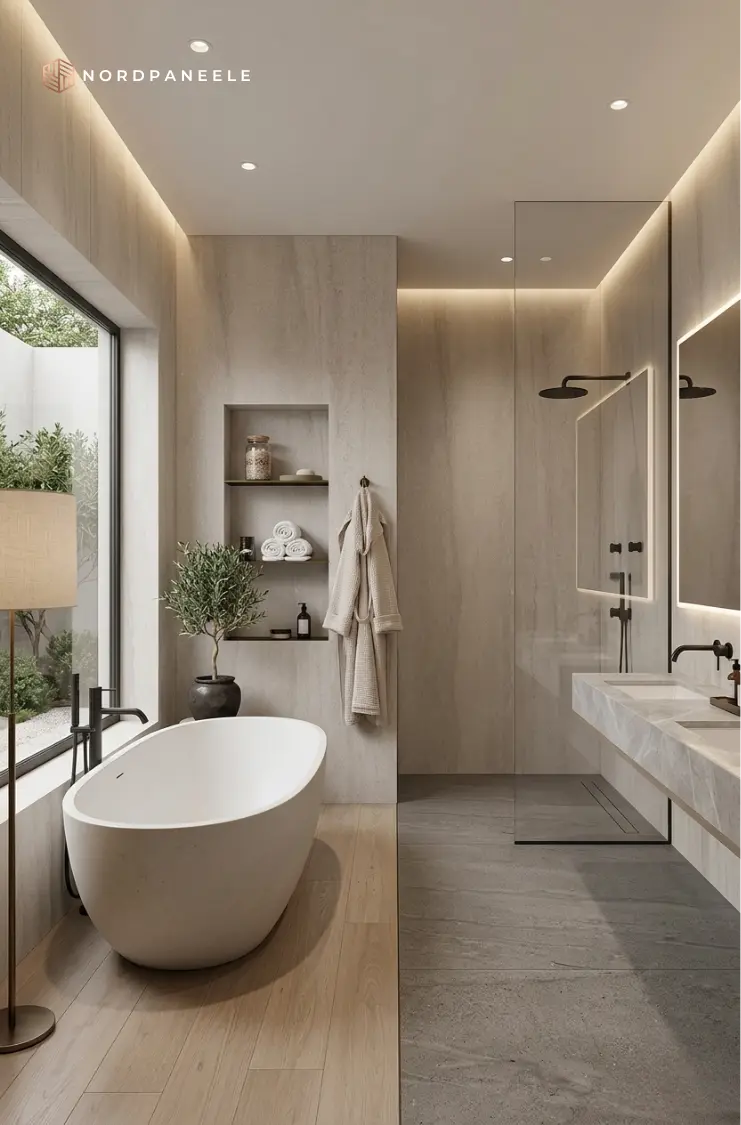
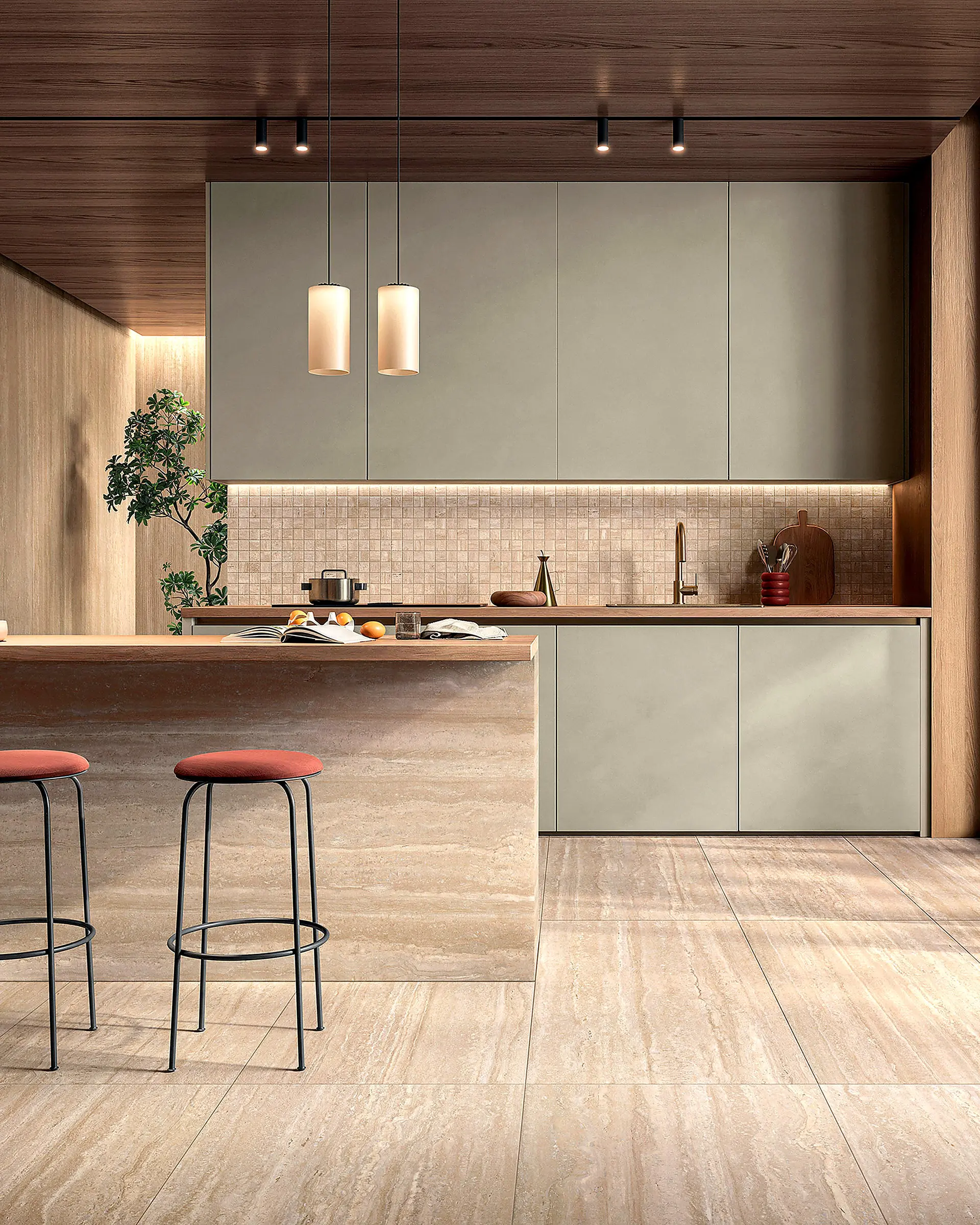
Seamless, 100% waterproof and in a stone look: SPC wall panels turn the shower into one continuous surface — straight onto the old tile, fitted in a day.
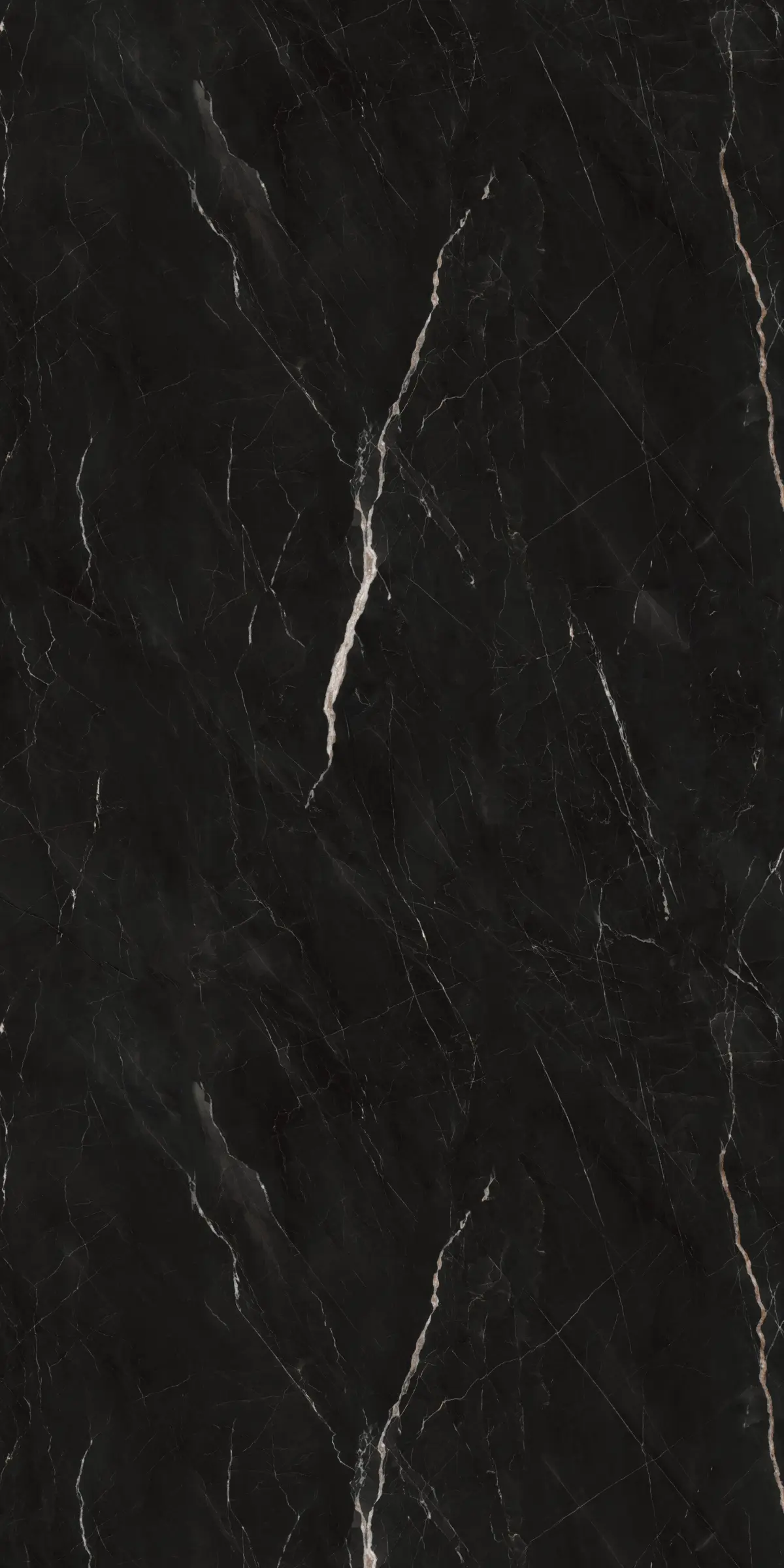
Order a sample box
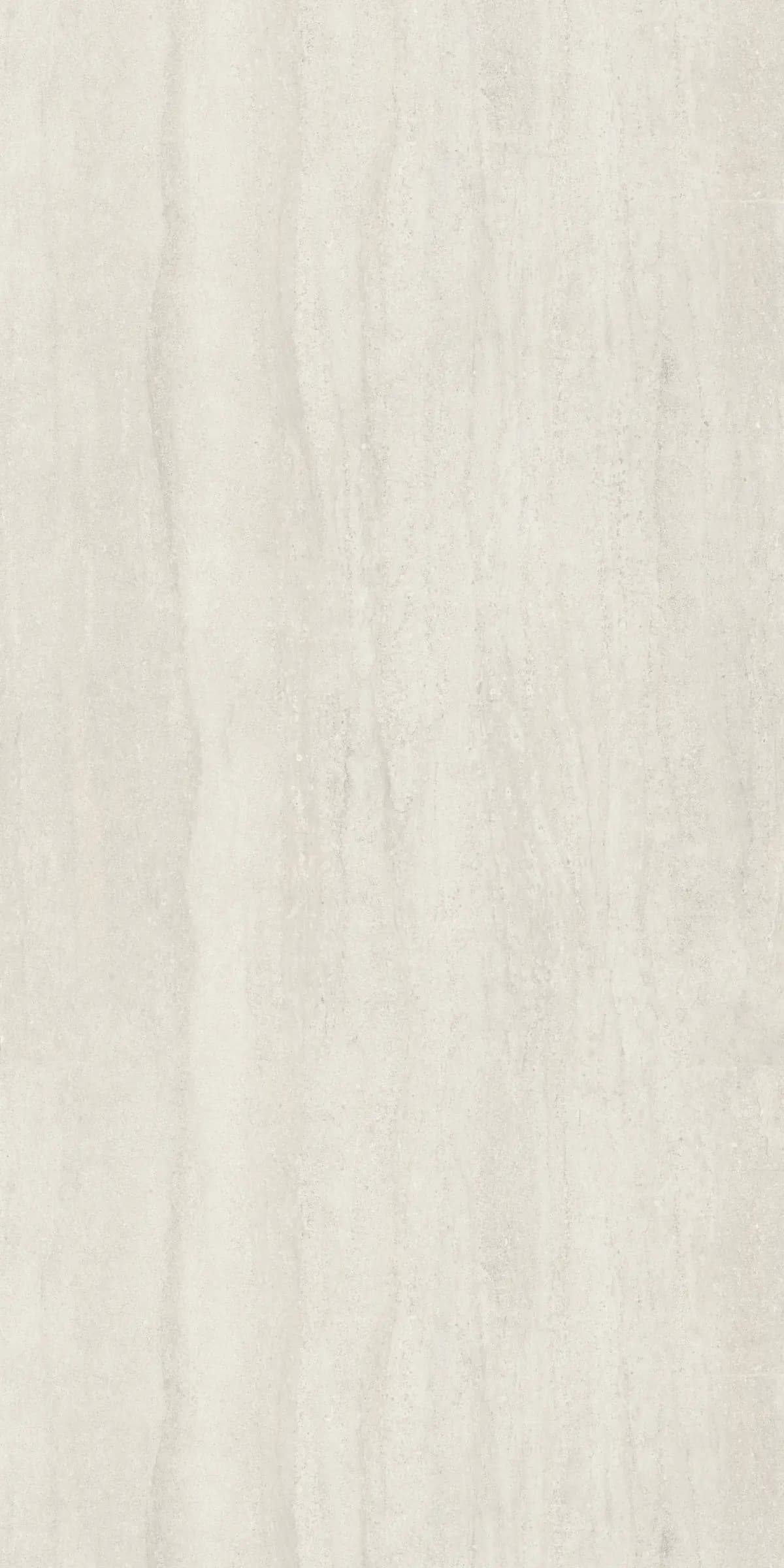
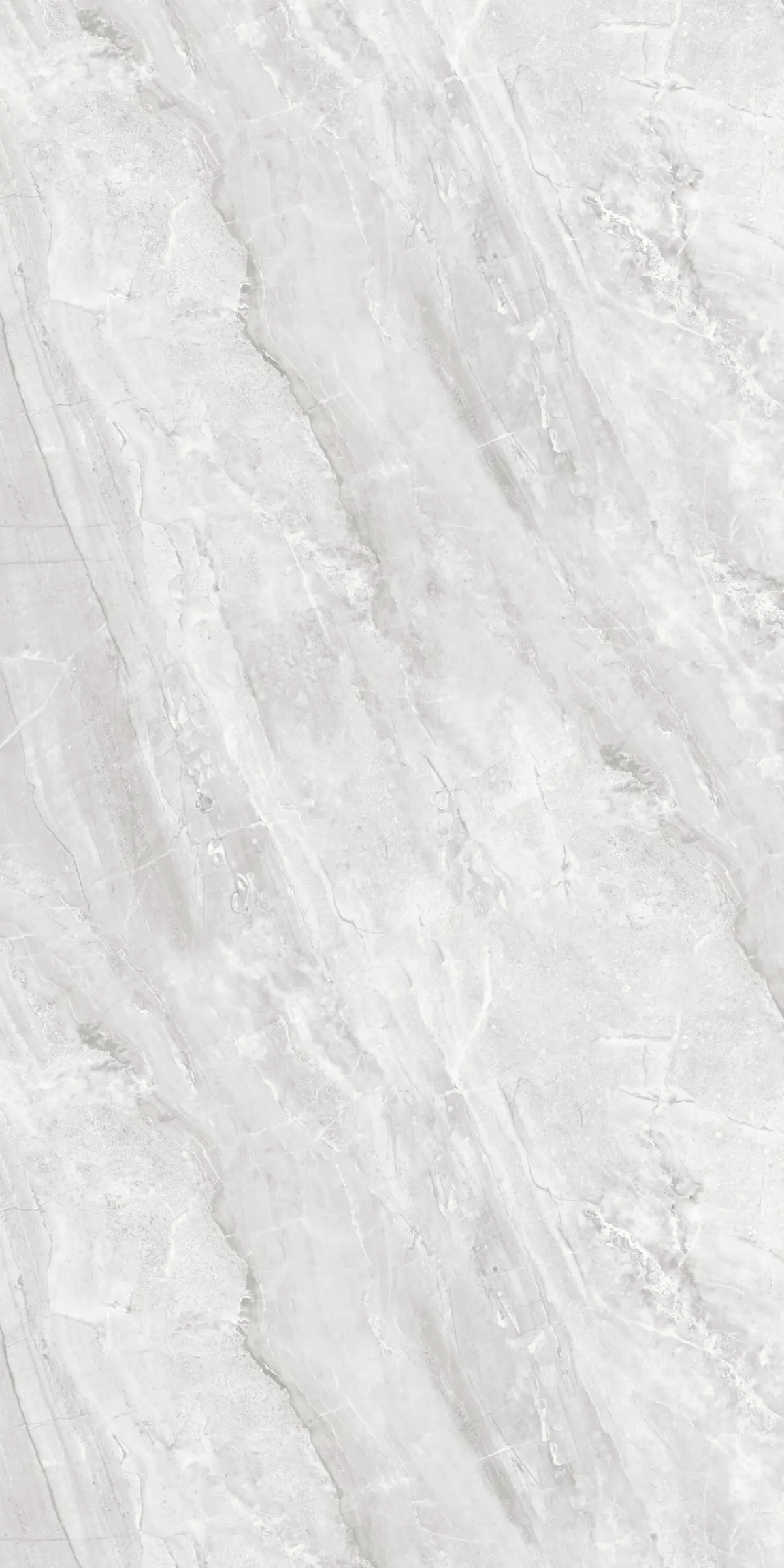
Up to 3 decors delivered free to your door — feel the stone look before you decide.
Choose samples