Tile refurbishment vs. wall panels
A tiled bathroom refurbishment averages €150–250 per m² and takes 2–3 weeks: strip out old tiles, inspect and repair the substrate, waterproof, set tiles, grout, run silicone, let everything dry. The bathroom is fully out of action throughout.
Wall panels replace the entire tile chain. They sit directly on top of existing tiles (if firmly bonded) or on any flat substrate. No waterproofing layer, no grout. A 6 m² wall is finished in an afternoon. Materials: €300–400 instead of €1,000–1,500.
Which panels are truly shower-suitable?
Not all wall panels tolerate direct water contact — PVC panels swell if bonding is flawed, and MDF panels in damp corners run into trouble within a few years. SPC panels are built differently: the Stone Polymer Composite core is non-absorbent, and the PU seal forms an unbroken protective layer.
For the direct shower zone we recommend silicone sealing along every joint between panel and floor, bathtub or shower tray. The click joints between panels themselves are already tight — no extra sealing needed there.
Will mould grow behind the panels?
This is one of the most frequent questions — and the answer is: not when installed correctly. The key is rear ventilation: panels are mounted with a 3 mm gap to the floor and ceiling so any residual moisture behind the panel can dry out. Combined with normal bathroom ventilation (window open for 10 minutes after showering), no persistent moisture builds up.
In particularly shower-intensive zones we additionally recommend a vapour-barrier membrane behind the panels — standard practice in new-build and in major old-build refurbishments. Details are in our installation guide.
Which looks work best in a bathroom?
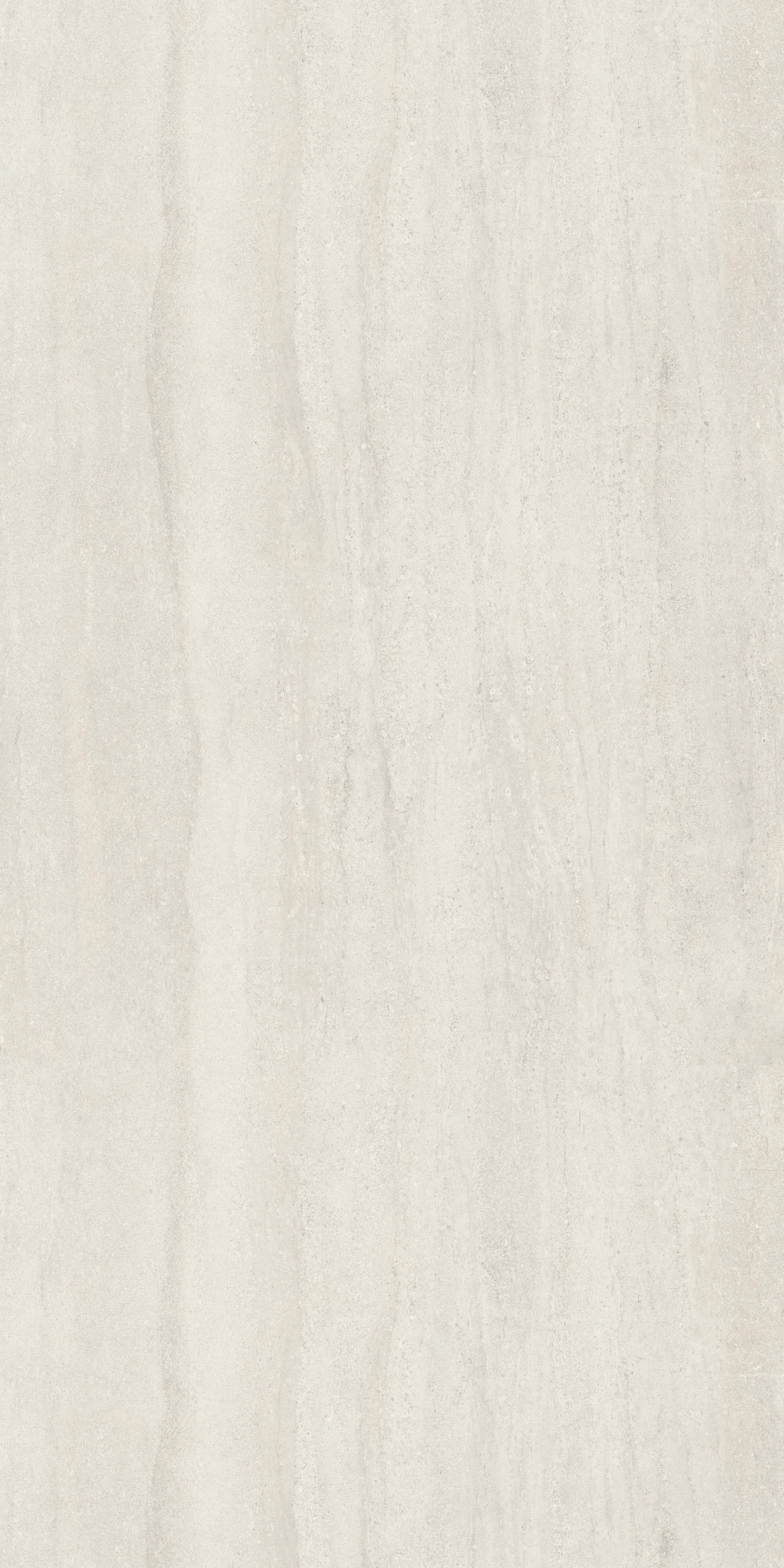
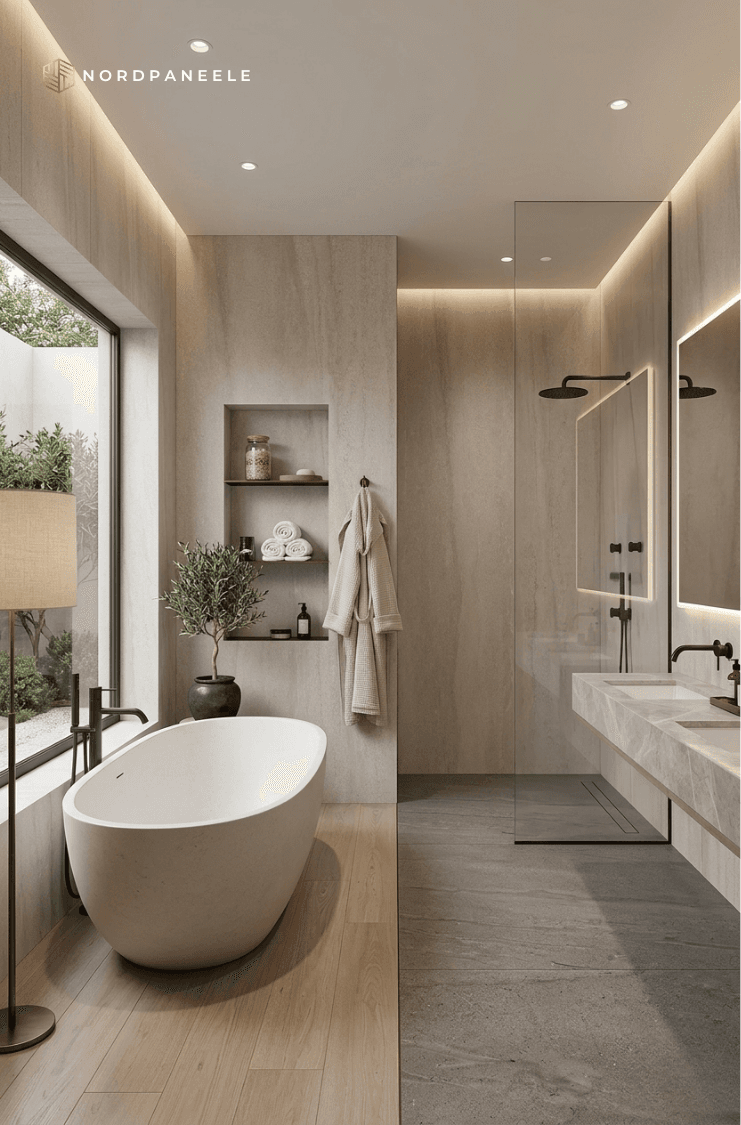
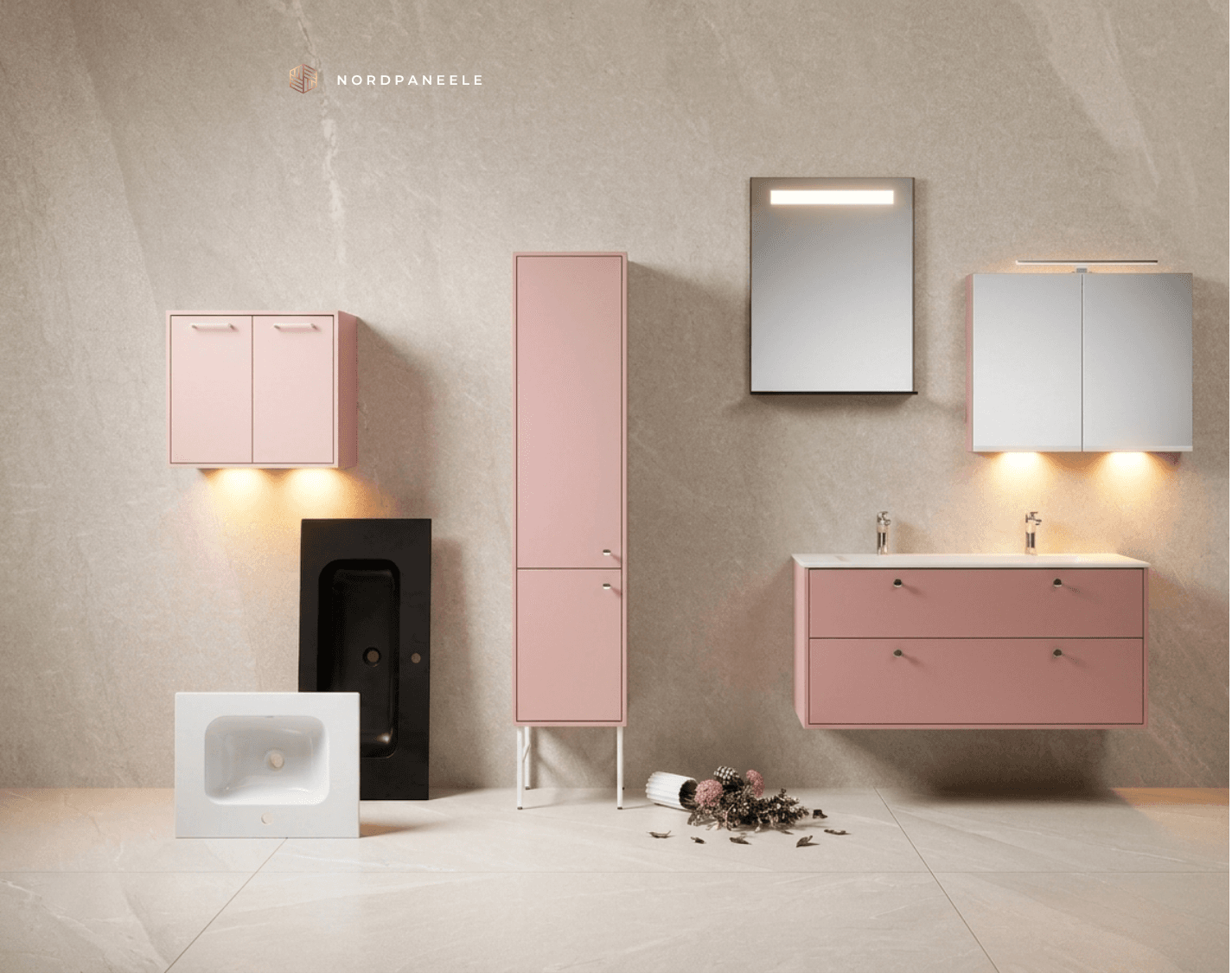
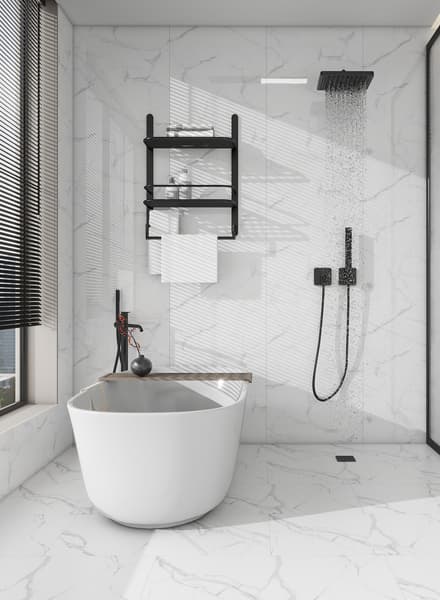
Glossy marble (Carrara, Statuario, Calacatta) is the classic. Light-reflecting, visually enlarges small bathrooms, timeless. Matte concrete look (Chiaro, Naturale) creates a spa atmosphere and suits modern-Scandinavian interiors. Dark marble variants (Anthracite, dark Onyx) feel luxurious but need plenty of light.
Customers often combine two looks: three walls in neutral light marble, one accent wall (usually the vanity or shower back wall) in a more assertive look.