September 30, 2026
How to Care for SPC Wall Panels: The Complete Guide
SPC wall panels are rightly considered low-maintenance. But "low-maintenance" does not mean "maintenance-free". Knowing what the PU surface can handle — and what it cannot — keeps panels in perfect condition for decades. This guide covers what to do daily, weekly and annually.
Why SPC is so easy to care for
The secret lies in the construction: SPC panels have a mineral core that absorbs no water, and a PU wear layer (polyurethane) on the surface. This layer is not porous — limescale, soap, shampoo and most household chemicals cannot penetrate it. Whatever lands on the surface can be wiped off.
Unlike real stone or marble:
- No sealing or re-impregnation needed
- No swelling or warping from moisture
- No efflorescence from minerals in the water
- No staining from cleaning products (when used correctly)
Daily care — 30 seconds is enough
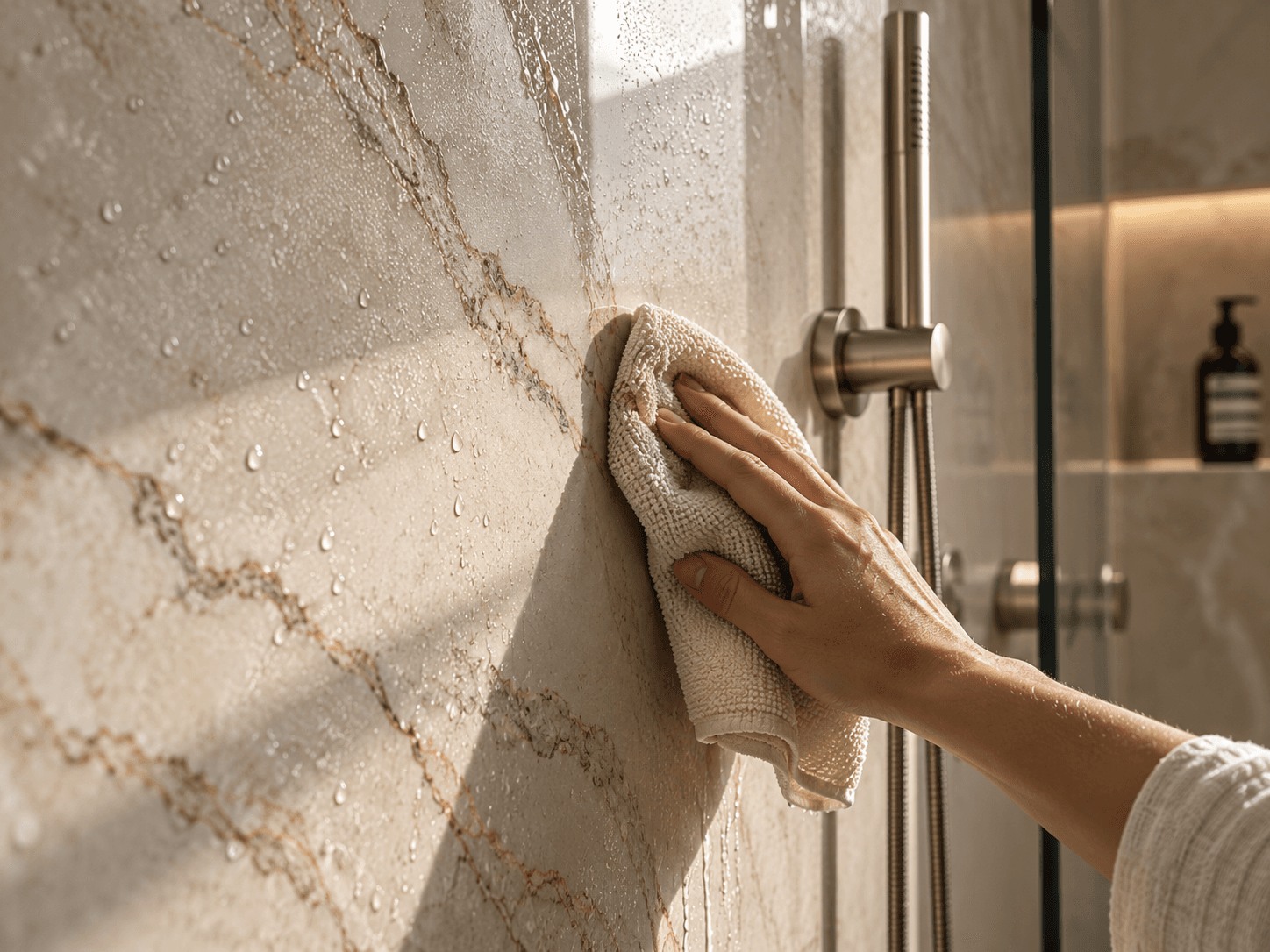
In the shower and in the kitchen, the rule is: wipe down briefly after use. This prevents limescale and soap film from drying out and hardening.
Recommended method:
- Damp microfibre cloth (no abrasive pad)
- Wipe the surface with light pressure
- Follow with a dry cloth or squeegee to prevent water spots
This sounds like effort — but it is no more than drying off after a shower. Done consistently, it largely eliminates the need for more intensive weekly cleaning.
Weekly cleaning
Once a week, a more thorough clean that also removes stubborn limescale and soap film:
- Apply spray: household vinegar diluted 1:3 with water, or a standard pH-neutral bathroom cleaner. Spray onto the surface and leave for 2–3 minutes.
- Wipe: soft microfibre cloth or soft sponge, circular motions.
- Rinse: rinse with clean water — especially in the shower, where residue could be reactivated next time you shower.
- Dry: dry with a cloth or squeegee for a streak-free result.
Stubborn stains: what works on what
| Stain | Product | Method |
|---|---|---|
| Limescale | Vinegar 1:3 or citric acid 5 % | Leave 5 min, wipe, rinse |
| Soap film | pH-neutral bathroom cleaner | Apply, wait 2 min, wipe off |
| Hairspray / lacquer | Isopropyl alcohol (70 %) | Apply to cloth, wipe briefly — do not leave to soak |
| Grease (kitchen) | Diluted washing-up liquid | Brief contact, wipe, rinse |
| Rust marks (from metal objects) | Citric acid solution | Apply, 5 min, rub gently |
| Permanent marker | Acetone-free nail polish remover or isopropyl | Apply to cloth, dab precisely, wipe immediately |
What you should never use
The PU surface is robust — but not indestructible. The following products damage it permanently:
- Abrasive cleaners and pads (steel wool, green Scotch-Brite) — scratch the wear layer irreparably
- Bleach (chlorine) — attacks the PU layer and can cause discolouration
- Acetone-containing cleaners — dissolves the surface
- Steam cleaners above 60 °C — softens the core; joints can release
- High-pressure washers — forces water into joints and edges
- Strong acids and alkalis (hydrochloric acid, concentrated acetic acid, drain cleaner) — not suitable for SPC
Silicone joints — the most maintenance-intensive part
The panels themselves are robust. The silicone seals — at floor, ceiling, corners, fixtures — are what deteriorates over time. Mould in bathrooms almost never forms on the panel itself; it forms in the silicone joint.
Regular joint maintenance:
- After showering: dry the joint so no film of water sits in it
- Monthly: wipe joints with a lint-free cloth and diluted vinegar cleaner
- At the first sign of mould: treat immediately with a specialist anti-mould spray (chlorine-free)
Annual inspection: Once a year, inspect all joints. If silicone cracks, lifts or turns permanently black, remove it completely and reseal. This is the only genuinely labour-intensive maintenance moment — and it typically comes for the first time after 5–8 years.
Care by room type
Shower
Daily wiping is most important here — limescale from hard water builds up quickly. Anyone living in a hard-water area (water hardness above 14 °dH) should treat weekly with citric acid solution.
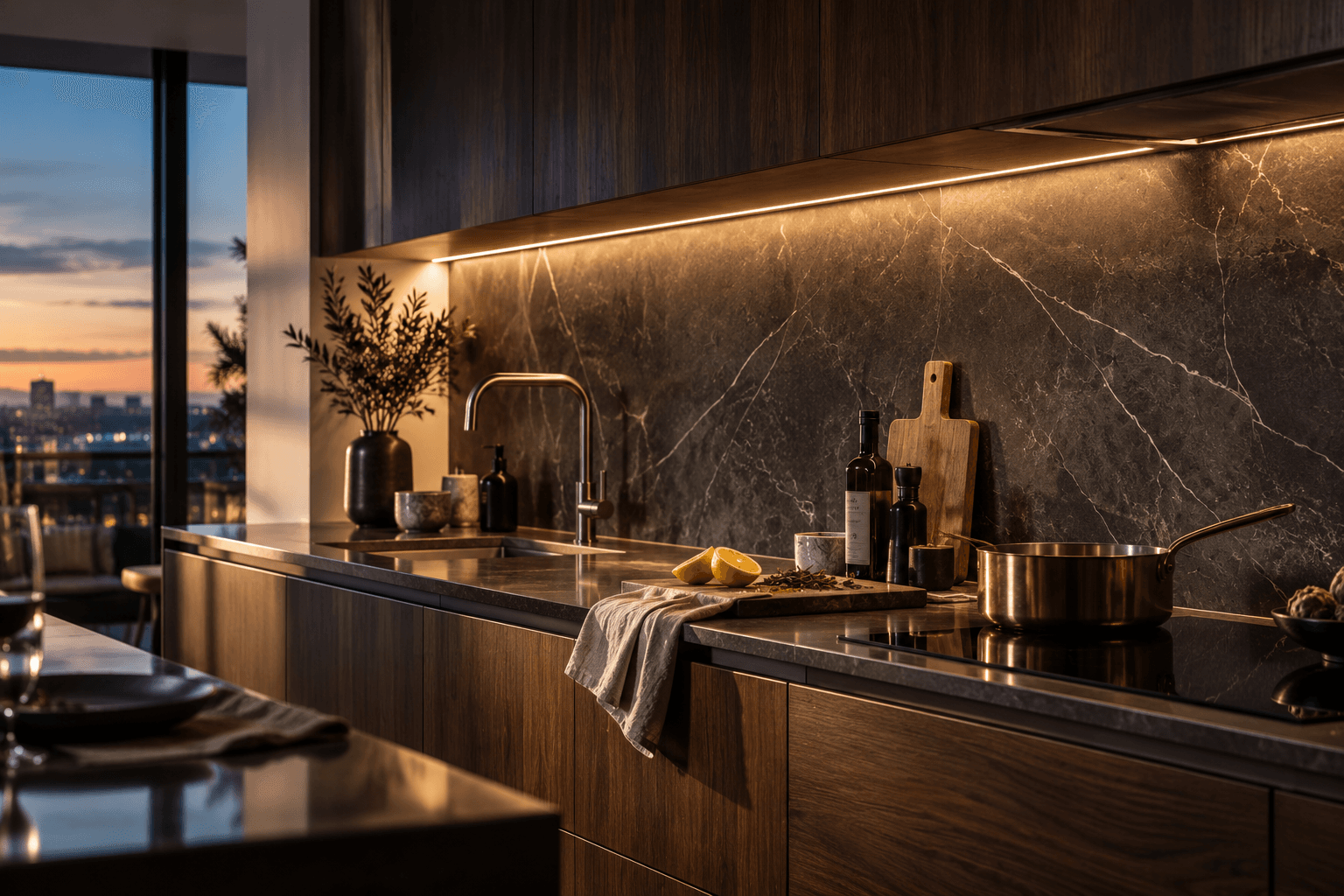
Kitchen (backsplash)
Wipe grease splashes immediately — dried grease bonds dirt. After cooking: damp cloth, done. Weekly with a pH-neutral kitchen spray.
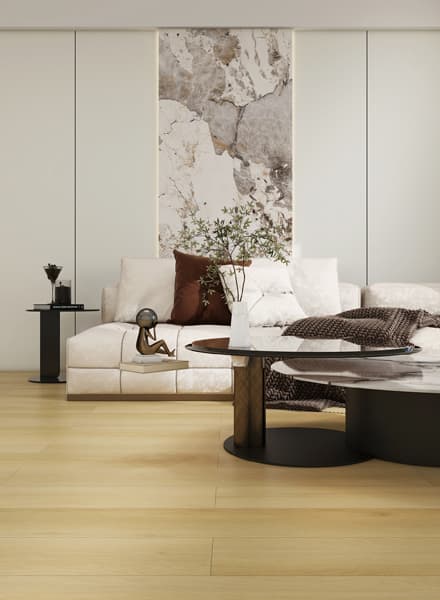
Living room (accent wall)
Dusting is sufficient here. Wipe with a slightly damp cloth once a month — more often if needed. No cleaning products required as long as there is no specific stain.
Frequently asked questions
Can I use a steam cleaner?
Not recommended. Steam cleaners above 60 °C can soften click joints and reactivate adhesive in glued installations. A damp cloth is entirely sufficient for routine cleaning.
How do I remove scratches?
Light surface scratches in the PU layer can be buffed out gently with a specialist plastic polish (non-abrasive). Deep scratches through the decor are not reversible — but with proper care, they rarely occur.
Do I need to seal or impregnate the panels?
No. The PU wear layer is already a permanently applied protective coating. Additional sealants do not bond reliably to SPC surfaces and can alter the appearance.
What should I do if a panel is damaged?
Individual panels in a click installation can be replaced without tools — click joints release easily. In a glued installation, replacement is more involved but still possible. We always recommend ordering one or two extra panels when purchasing, and keeping them as a reserve.